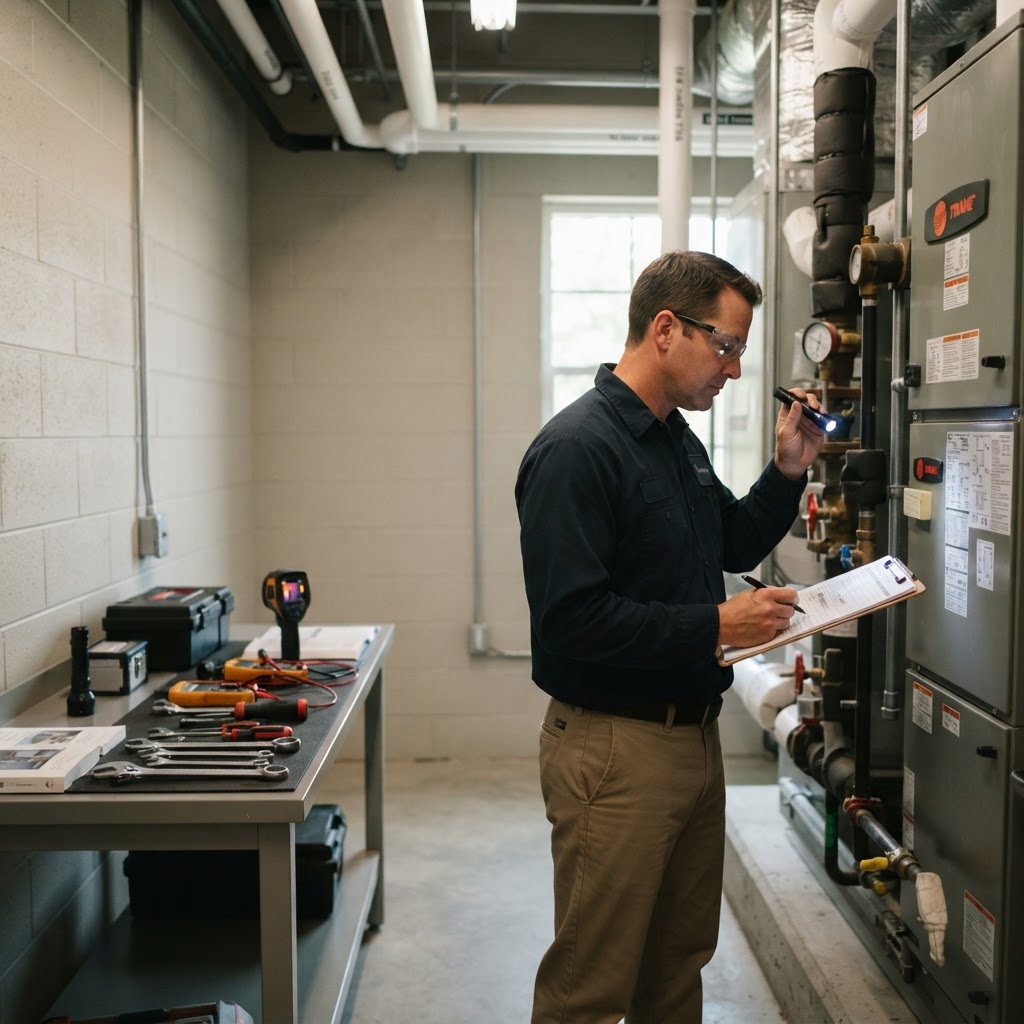
A church facility audit is a systematic inspection of your building and grounds to identify maintenance needs and safety hazards. By conducting this review annually, you ensure that your physical resources remain safe and functional for your congregation and community. This process helps you move from reactive, emergency-based repairs to a proactive, planned maintenance schedule.
Prepare for the inspection
Before walking the property, gather all existing documentation regarding your building systems and past repairs. Having a clear history of your facility helps an inspector understand what has been serviced and what has been neglected.
- Gather records. Collect manuals, warranties, and service logs for HVAC, plumbing, and electrical systems.
- Identify experts. Recruit a professional auditor, architect, or building inspector to provide an objective assessment.
- Define scope. List all areas of the property, including grounds, exterior structures, and interior mechanical rooms.
Execute the physical walkthrough
During the walkthrough, focus on identifying potential hazards and signs of wear that could lead to system failures. Document every finding with notes and photographs to create a baseline for your maintenance plan.
- Check safety systems. Test fire alarms, emergency lighting, and exit signage to ensure they meet current standards.
- Inspect building envelope. Look for roof leaks, foundation cracks, or damaged siding that could allow water intrusion.
- Evaluate mechanicals. Assess the age and condition of heating, cooling, and water systems to estimate their remaining service life.
Create a maintenance plan
Once the inspection is complete, organize the findings into a prioritized list of projects. This plan should categorize tasks by urgency and link them to your Facilities budget.
- Rank by urgency. Separate immediate safety repairs from long-term capital improvements.
- Estimate costs. Assign a budget to each project to help with future financial planning.
- Set a schedule. Create a calendar for routine tasks like filter changes, gutter cleaning, and seasonal inspections.
After finalizing your report, present the findings to your leadership team to secure support for the necessary work. Use this document to guide your annual budget process and ensure your facility remains a reliable asset for your ministry.
Common questions
How often should a church conduct a facility audit?
A comprehensive facility audit should be conducted at least once every year. This allows you to catch minor issues before they become expensive repairs and ensures your maintenance plan remains aligned with your current budget and ministry needs.
Who should perform the facility inspection?
While staff can perform routine checks, a formal audit should be conducted by a professional, such as an architect, building inspector, or specialized facility auditor. These professionals provide an objective perspective and can identify structural or safety issues that non-experts might overlook.
What should be included in a facility maintenance plan?
A good plan includes an inventory of all building components, a schedule for routine maintenance tasks, a list of identified repairs ranked by priority, and a long-term capital improvement strategy that accounts for the life cycle of major equipment.
Organizations that help with this
These organizations are listed in The Ministry Network directory:
- Steadfast Grounds & Facilities · Maintenance
Ask for a recommendation
Tell us what your ministry is working on and we will point you to the right organizations. Send us a message.